


Posted on August 28, 2026 by Keeen
SOP Standards with KEEEN Products
From “consistent cleaning” to systems that are safer and more sustainable
In today’s business environment, cleanliness is no longer only about appearance or customer satisfaction.
It has become a critical component of Food Safety, Operational Risk Management, and ESG compliance.
Organizations with high operational standards—whether food processing plants, restaurants, hotels, or service businesses—must operate under hygiene systems that are measurable, repeatable, and auditable.
At the center of such systems lies SOP (Standard Operating Procedure).
SOP: The Standard that Makes Hygiene Verifiable
An SOP (Standard Operating Procedure) is a documented set of operational instructions that ensures tasks are performed in a consistent and controlled manner.
The objective of SOP is to ensure that hygiene practices:
- Produce consistent results
- Reduce contamination risks
- Can be verified and audited
In the food industry in particular, SOPs are closely linked with international food safety standards such as:
- HACCP (Hazard Analysis and Critical Control Points)
- GHP / GMP (Good Hygiene / Good Manufacturing Practices)
- ISO 22000 Food Safety Management
- BRCGS Global Food Safety Standard
- Thai FDA regulatory requirements
A well-designed SOP therefore serves not merely as a cleaning guideline, but as a risk control system protecting consumer safety.
KEEEN’s Approach: SOP Beyond Chemical Cleaning
KEEEN develops bio-based and biotechnology-driven cleaning solutions designed to support high-performance SOP systems while reducing environmental burden.
The design philosophy behind KEEEN products emphasizes:
- Operator-safe formulations
- Reduced hazardous chemical residues
- Compatibility with biological wastewater treatment systems
- Support for carbon reduction and sustainability targets
This approach allows organizations to integrate cleaning performance, environmental management, and workplace safety into a single operational framework.
Examples of SOP Applications Using KEEEN Solutions
1. Food Processing Plants
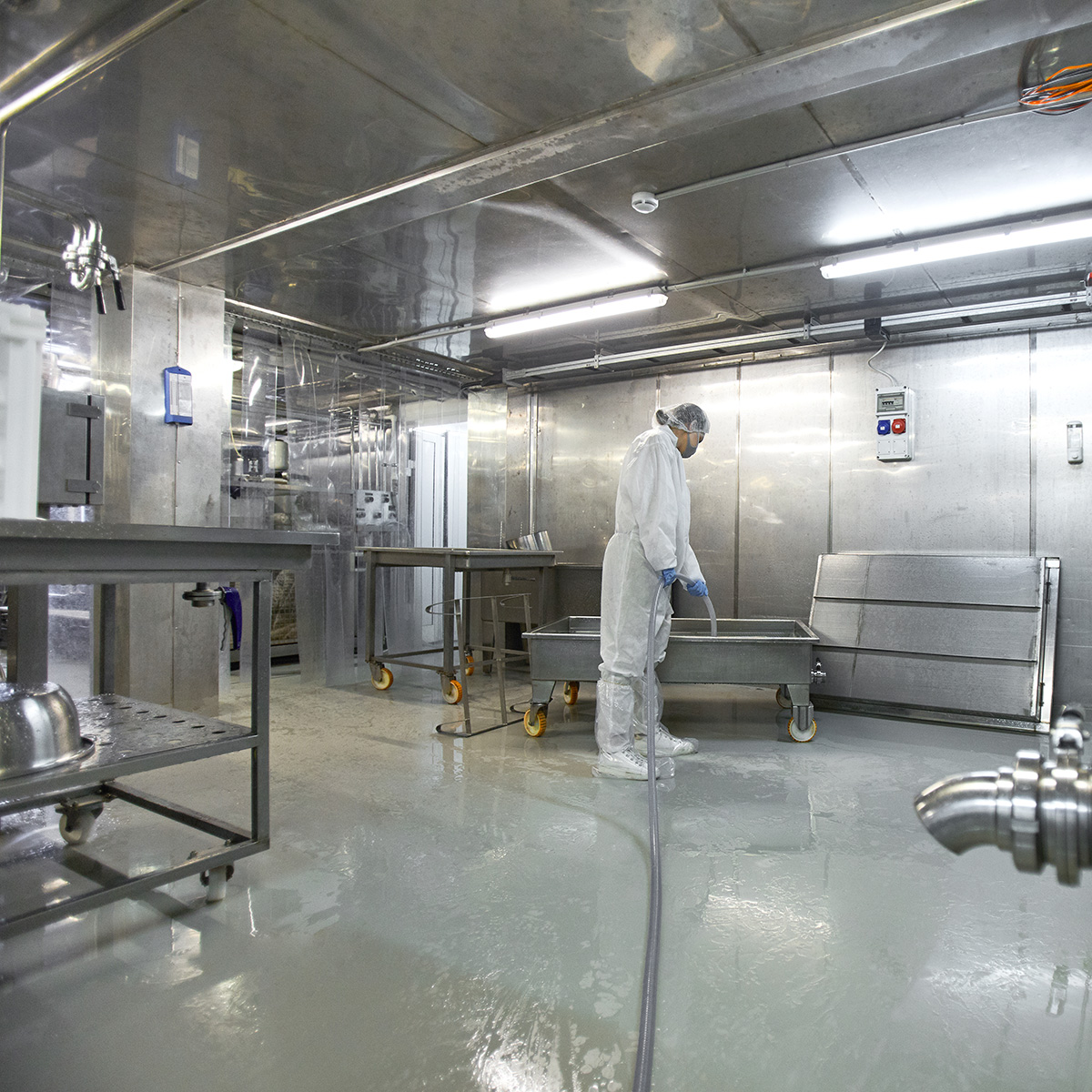
SOP: Cleaning of floors and equipment in RTE (Ready-to-Eat) zones
In RTE production environments, the primary risks include:
- Cross-contamination
- Biofilm formation on surfaces and equipment
Example SOP procedure
-
SOP-Standards-with-KEEEN-Products-01
-
SOP-Standards-with-KEEEN-Products-02
-
SOP-Standards-with-KEEEN-Products-03
-
SOP-Standards-with-KEEEN-Products-04
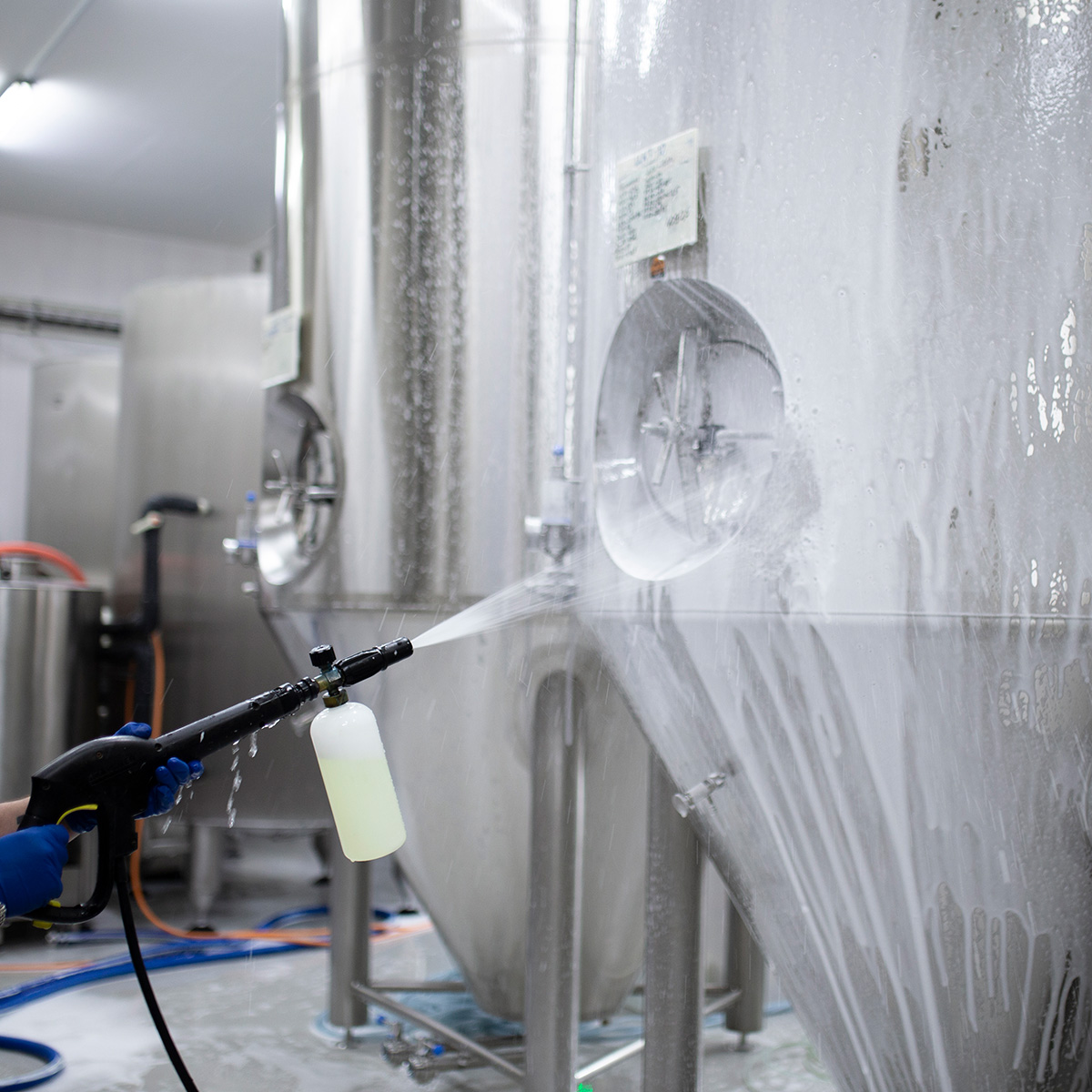
- Pre-rinse to remove food residues
Use KEEEN bio-based alkaline cleaner to break down proteins and fats. - Foaming application
Maintain proper contact time according to cleaning protocol. - Rinse thoroughly
Ensure removal of all detergent residues. - Disinfection step
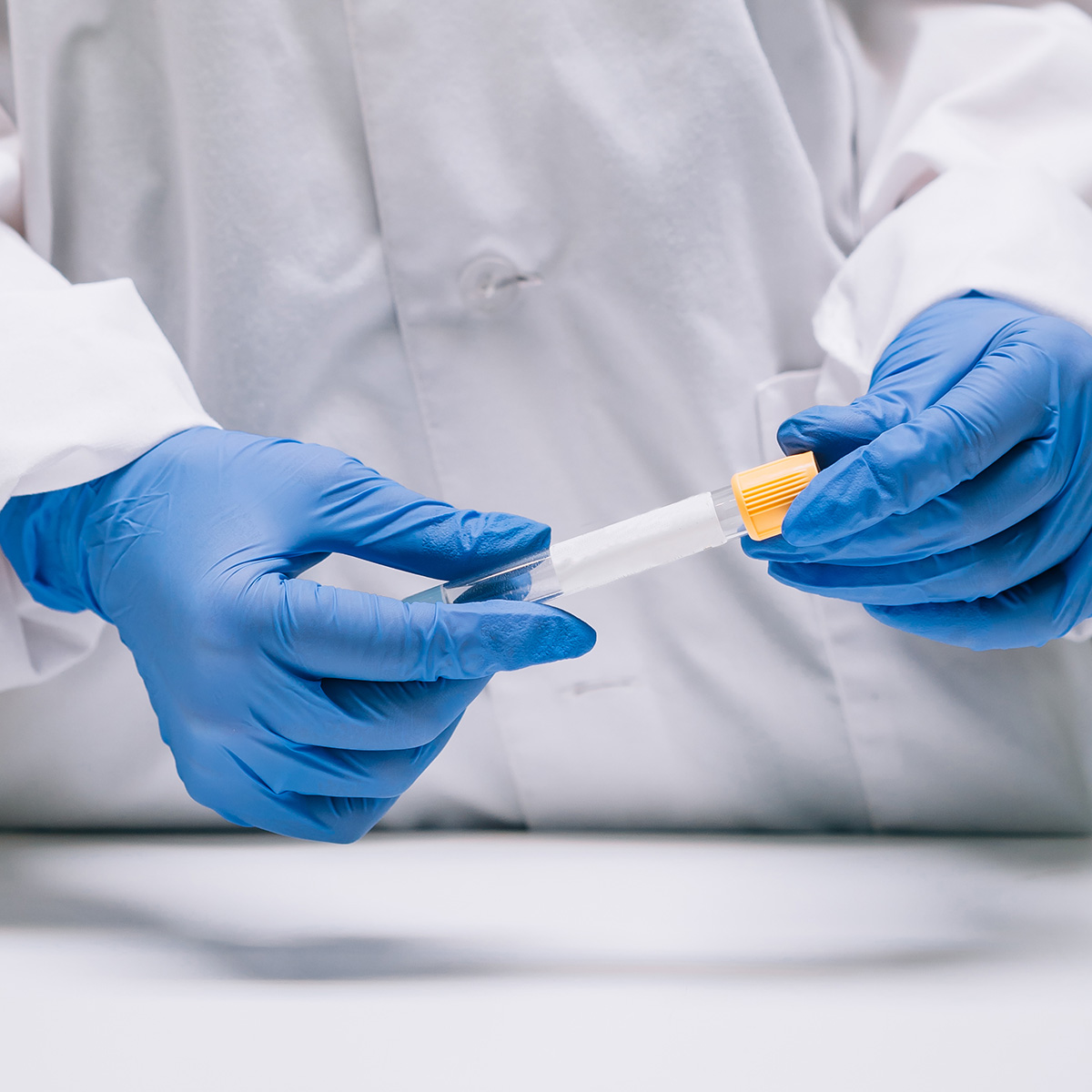
Apply a food-contact-grade disinfectant. - Verification
Perform ATP testing or microbiological swabbing.
This approach supports audit compliance while minimizing reliance on aggressive chemicals.
2. Restaurants and Central Kitchens
SOP: Surface sanitation and management of grease and odor in drainage systems
Food service operations commonly encounter accumulation of FOG (Fats, Oils, and Grease) which can lead to:
- Persistent grease deposits on equipment and surfaces
- Odor generation
- Drain blockages
- Wastewater discharge problems
KEEEN SOP example
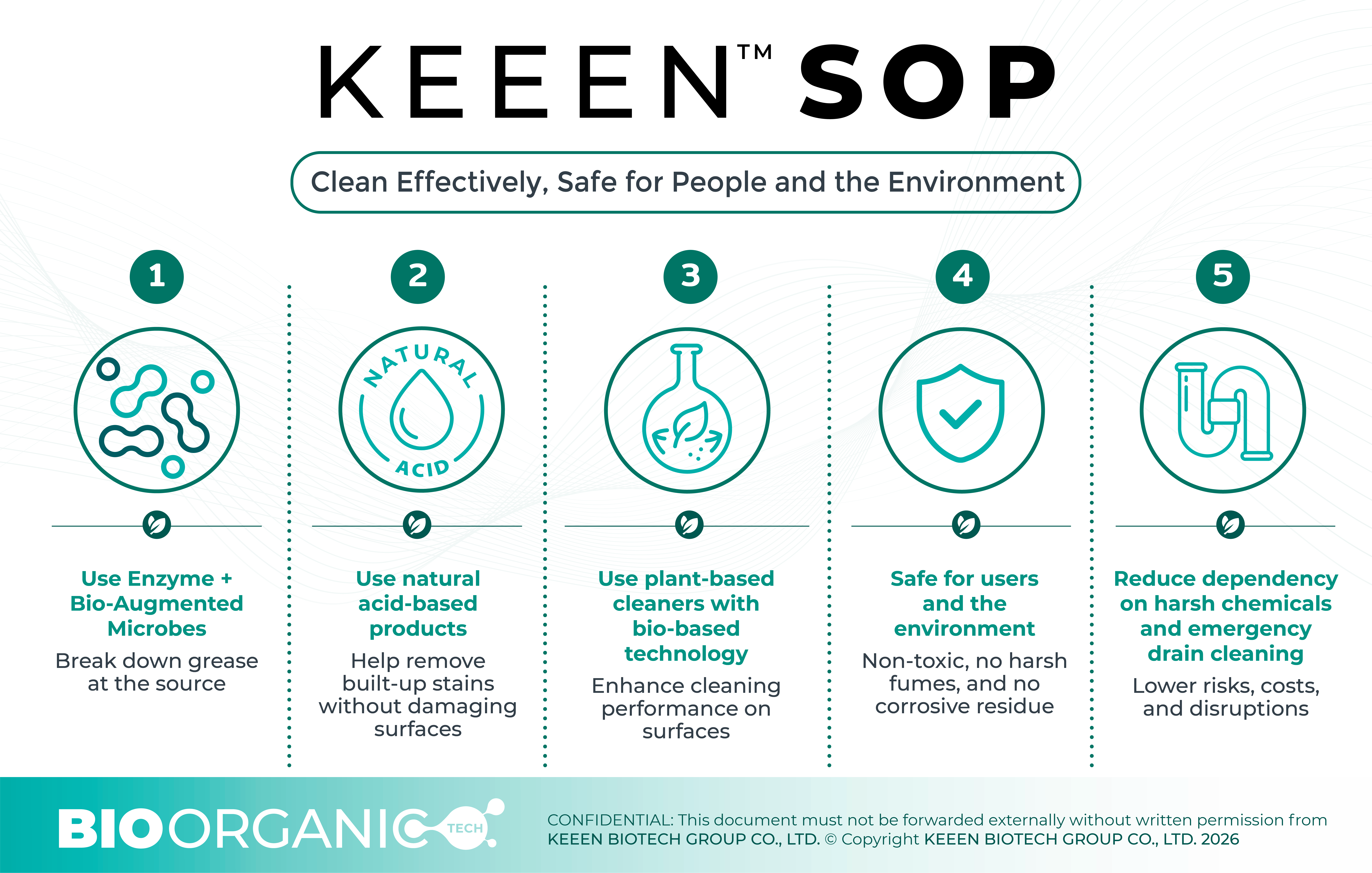
- Apply enzyme and bio-augmented microbial solutions to degrade grease at the source
- Use natural acid-based cleaners to remove mineral and residue buildup without damaging surfaces
- Utilize bio-based cleaning formulations derived from plant-based technologies
- Reduce reliance on emergency chemical drain treatments
This SOP connects cleaning operations with wastewater management, creating a more sustainable hygiene system.
3. Hotels and Large Facilities
SOP: Cleaning programs for Public Areas and Back-of-House operations
Hospitality environments require cleanliness standards that guests can both see and experience.
Example SOP framework:
- Housekeeping products designed to be low-odor and non-corrosive
- Reduced VOC emissions and respiratory irritation
- Chemical dispensing systems to ensure correct dilution ratios
This system improves operational consistency while reducing risks to both guests and staff.
4. Industrial Manufacturing
SOP: Removal of oils and organic residues from machinery and surfaces
Many industrial facilities traditionally rely on solvent-based degreasers, which present challenges such as:
- Flammability
- Strong odors
- Environmental and wastewater treatment burdens
KEEEN SOP solutions emphasize water-based bio-degreasers that provide effective cleaning while reducing environmental impact and operational risk.
SOP Creates Standards — But Today, SOP Alone Is Not Enough
Historically, the presence of SOP documentation may have been sufficient to meet compliance requirements.
Today, organizations must answer broader questions:
- Do cleaning chemicals create risks for workers?
- Do discharged wastewater streams burden treatment systems?
- Does the cleaning program increase or reduce carbon footprint?
- Can hygiene operations support ESG and sustainability goals?
Modern SOP frameworks therefore need to be designed to meet multiple dimensions of performance.
A future-ready SOP must be:
✔ Audit-safe
✔ Food-safe
✔ Operator-safe
✔ Environmentally responsible
✔ Sustainable by design
KEEEN: Standardized Hygiene with Sustainability Built In
KEEEN believes that standardized hygiene should not come at the expense of environmental impact.
For modern organizations, the objective is no longer simply to “pass an audit.”
It is to build operational systems that are safe today and sustainable for the future.
Through bio-based innovation and biotechnology, KEEEN supports organizations in developing hygiene programs that achieve both high operational standards and long-term environmental responsibility.