


Posted on September 25, 2026 by Keeen
Dispensing Systems – The Standards in the Food Service Industry
In the food service industry, cleanliness is not merely about visual appearance or customer perception. It is a fundamental mechanism that underpins food safety, risk management, and long-term business sustainability.
Every stage of operation—from raw material preparation and food processing to cleaning and sanitation—directly impacts consumer safety. As regulatory requirements and customer expectations continue to rise, food service operators are expected to manage hygiene with greater precision and consistency.
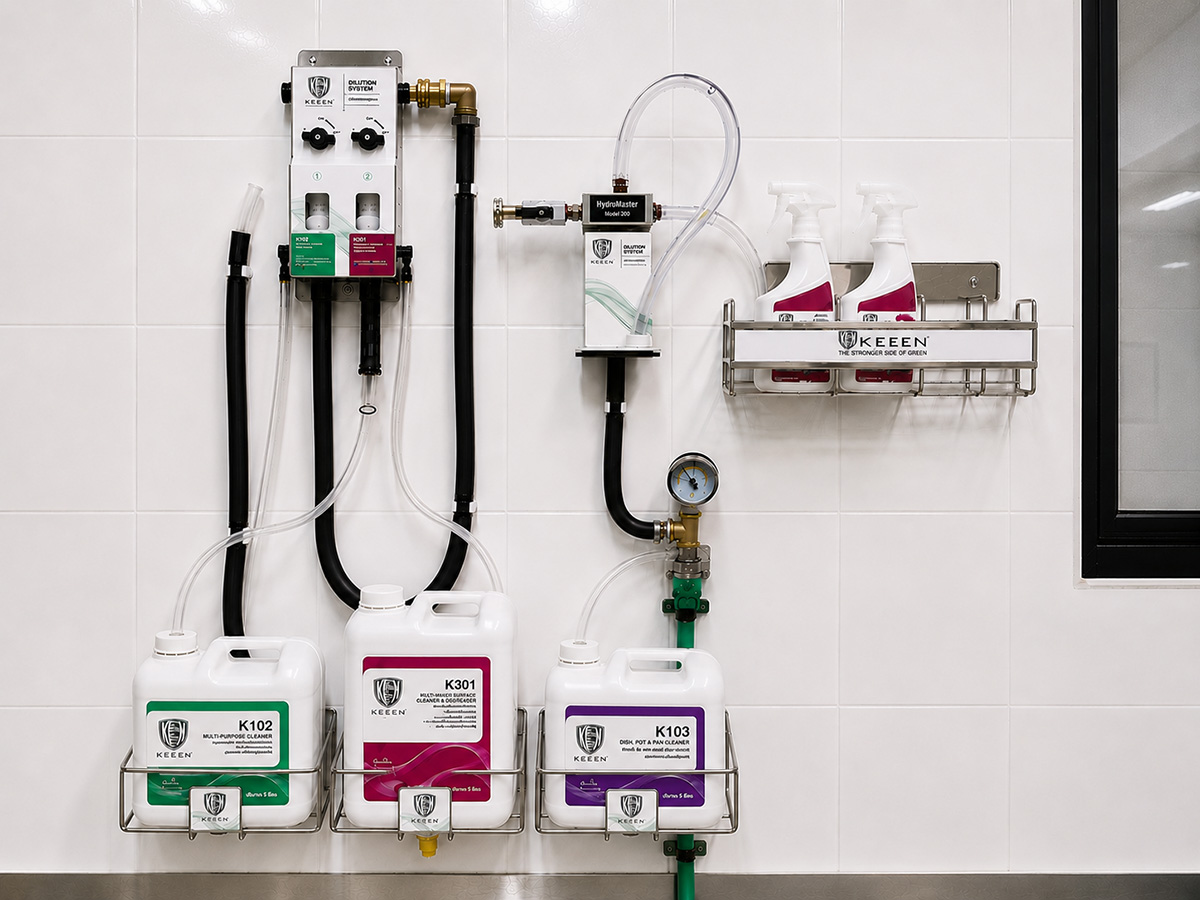
One critical component that is often underestimated, yet has significant system-wide impact, is the dispensing system (Chemical Dispenser / Dosing System).
A dispensing system does more than simply deliver cleaning chemicals. It functions as a control mechanism that ensures consistency, reliability, and accountability across the entire sanitation process.
-
อุปกรณ์จ่ายน้ำยา-ความจำเป็นเพื่อมาตรฐานในธุรกิจร้านอาหาร-02
-
อุปกรณ์จ่ายน้ำยา-ความจำเป็นเพื่อมาตรฐานในธุรกิจร้านอาหาร-03
-
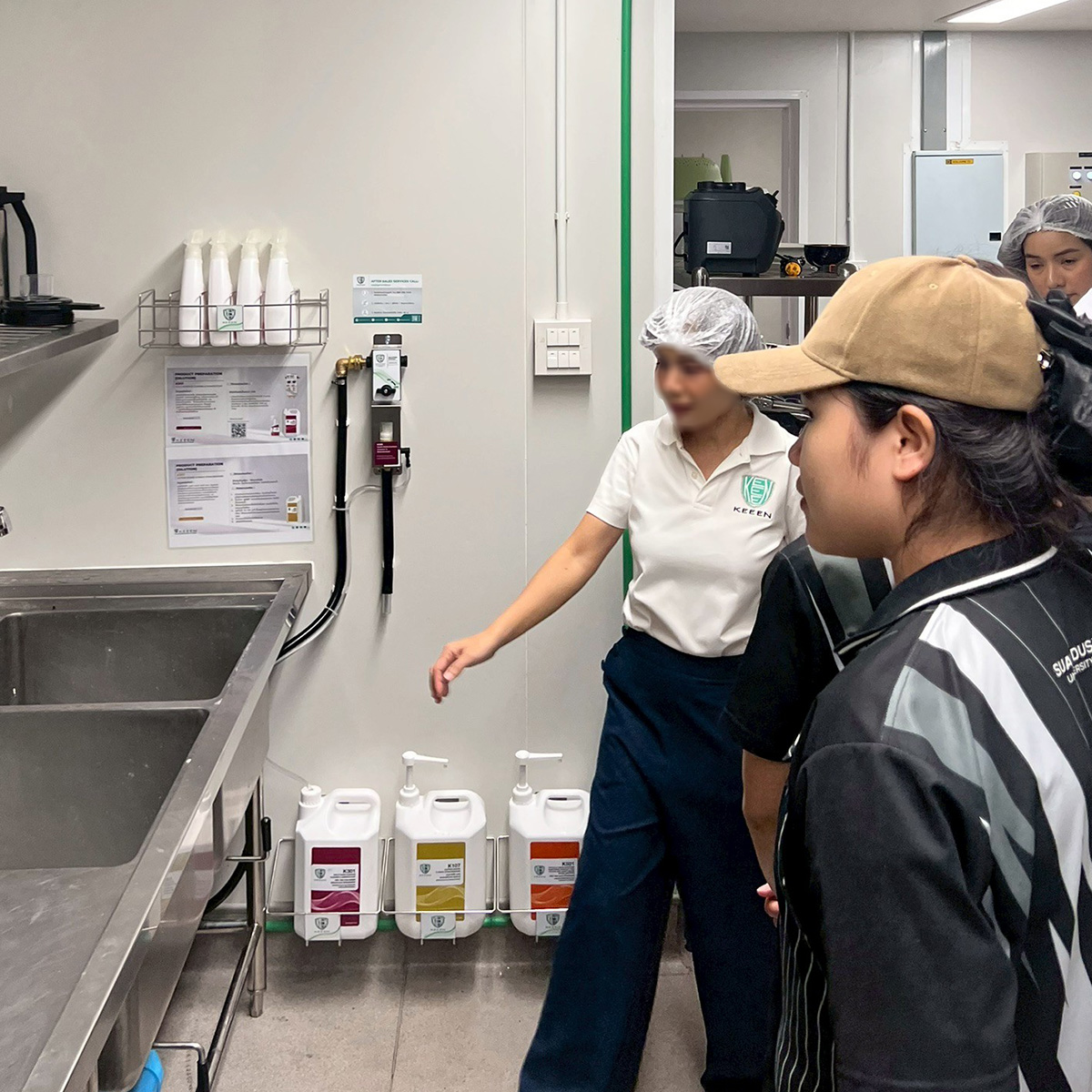
อุปกรณ์จ่ายน้ำยา-ความจำเป็นเพื่อมาตรฐานในธุรกิจร้านอาหาร-04
1.Concentration Control: The Core of Cleaning Effectiveness
All cleaning and sanitizing chemicals are developed based on chemical and microbiological principles. Each formulation is designed to work within a specific range known as the effective concentration—a balance point between performance and safety.
When the concentration is too low – Over-dilution of cleaning chemicals can lead to:
- Incomplete removal of grease, proteins, and food residues
- Survival of microorganisms on food-contact surfaces
- Increased risk of cross-contamination between equipment and work areas
In food service operations—especially those handling Ready-to-Eat (RTE) foods—this risk directly affects consumer health.
When the concentration is too high – Using chemicals at excessive concentrations does not improve hygiene outcomes. Instead, it may result in:
- Chemical residues remaining on food-contact surfaces and utensils
- Damage to materials such as stainless steel, rubber seals, and plastics
- Increased health risks to employees through skin contact or inhalation
A chemical dispensing system ensures that the dilution ratio remains accurate and consistent every time, transforming sanitation from a practice based on experience or estimation into a measurable, repeatable, and verifiable process.
2.Reducing Food Safety Risks and Audit Challenges
Under international food safety standards such as GHP, HACCP, and ISO 22000, Cleaning and Sanitation are classified as Prerequisite Programs (PRPs)—the foundation upon which the entire food safety system is built.
In real-world audits, food service businesses often encounter challenges such as:
- Inability to demonstrate that chemicals are mixed at the correct concentration
- Variability in chemical usage between shifts or locations
- Cleaning effectiveness depending more on individual experience than on defined systems
Implementing a chemical dispensing system provides system-based evidence that:
- Chemical concentrations are controlled according to defined standards
- Variability caused by human behavior is minimized
- Sanitation SOPs are effectively implemented, not merely documented
For food court operators, chain restaurants, and brands subject to frequent audits, this represents the difference between “cleaning activities” and a structured sanitation system.
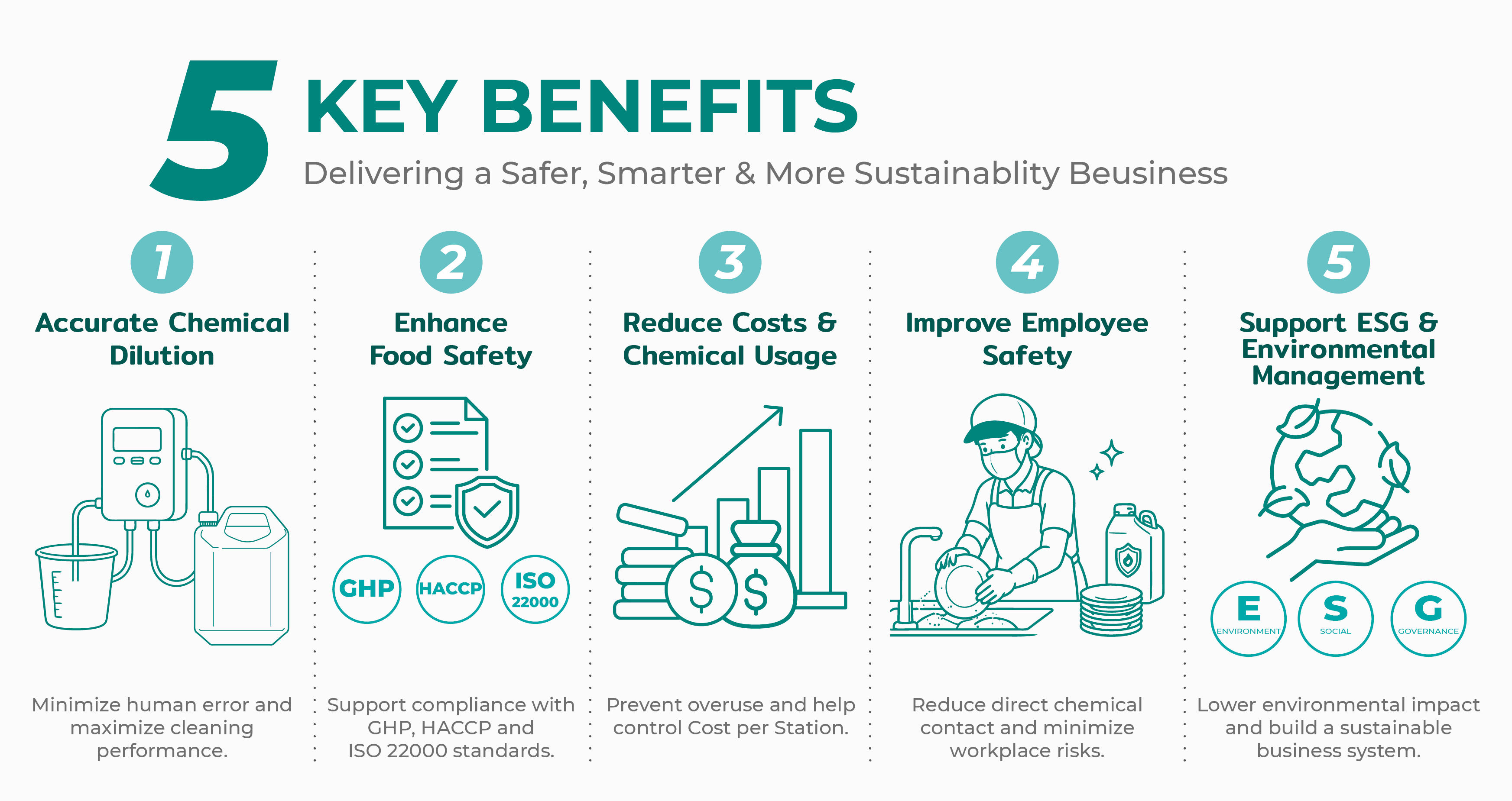
3.Systematic Cost Control, Not Assumptions
Many food service operators view cleaning chemicals as a minor operational expense. In reality, hidden costs are driven by daily usage behavior.
Field observations across food service operations reveal that:
- Manual mixing often results in 20–50% chemical overuse
- Some areas apply excessive concentration out of concern for hygiene
- Other areas under-dose to reduce costs, leading to repeated cleaning
Chemical dispensing systems allow operators to:
- Calculate cost per wash or per cleaning station accurately
- Forecast monthly chemical expenses with greater confidence
- Benchmark performance and cost efficiency across multiple locations
This data-driven visibility enables Operations, Finance, and Management teams to align decisions using the same performance metrics.
4.Employee Safety: A Critical Yet Overlooked Factor
Dishwashing and sanitation staff are among those most frequently exposed to cleaning chemicals. Without controlled dispensing, manual mixing and direct handling of concentrates may lead to:
- Chronic skin irritation and dermatitis
- Respiratory exposure to chemical vapors
- Accidental spills and splashes during handling
Chemical dispensing systems significantly reduce direct contact with concentrated chemicals, lower the risk of mixing errors, and create a safer working environment.
Over time, this contributes to improved employee health, reduced staff turnover and build a stronger employer reputation built on workplace safety standards
5.Alignment with ESG and Environmental Management
From a sustainability perspective, excessive chemical use has direct environmental consequences to increased chemical load in wastewater, greater burden on wastewater treatment systems and higher water consumption due to re-washing
By delivering precise dosing based on scientific principles, chemical dispensing systems help to minimize chemical discharge into wastewater, improve treatment system performance and support the effective use of bio-based and biodegradable cleaning solutions beyond marketing claims
This approach aligns well with Green Restaurant, Sustainable Food Service, and ESG-driven operational strategies.
Which Food Service Operations Should Use Dispensing Systems?
Dispensing systems are particularly recommended for:
- Restaurants located in shopping malls
- Chain restaurants and multi-site operations
- Central kitchens and cloud kitchens
- Businesses subject to regular audits
- Operators seeking long-term cost and quality control
Dispensing systems are not optional accessories. They are an integral part of the sanitation infrastructure of modern food service operations.
For businesses seeking reliable food safety performance, consistent, repeatable sanitation standards, predictable and controllable operating costs also sustainable growth aligned with ESG principles
Dispensing systems should be viewed as a system-level investment, not an operational expense.