


Posted on June 12, 2026 by Keeen
Cleaning and Disinfection of Stainless-Steel Surfaces in Industry
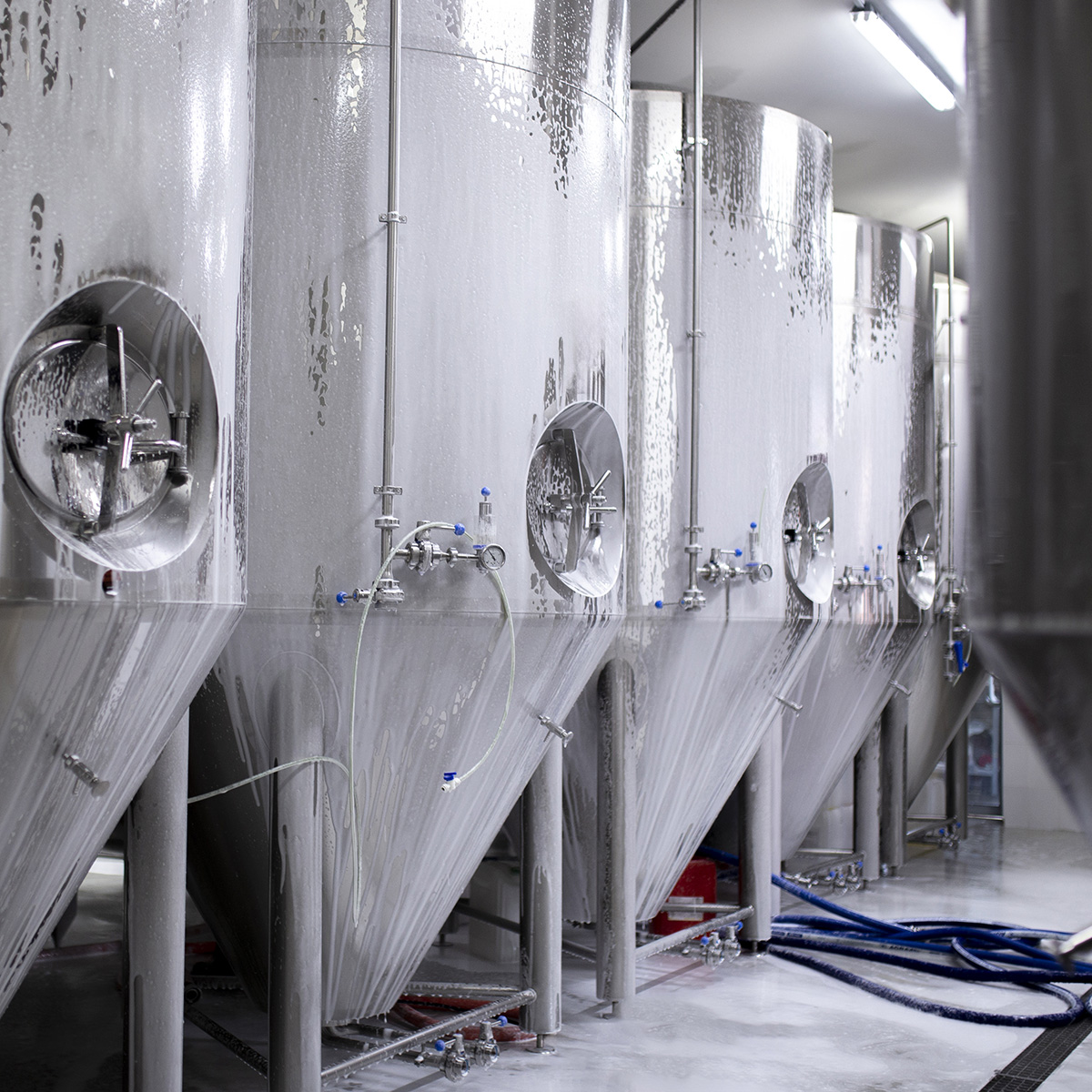
Stainless-steel surfaces are widely used across all industrial sectors—particularly in food and pharmaceutical manufacturing—thanks to their excellent corrosion resistance, mechanical strength, and smooth, non-porous finish, which together enable highly effective cleaning and disinfection. However, to maximize cleanliness, safety, and equipment lifespan, it’s important to choose the right stainless-steel grade and cleaning regimen, balancing its hygienic advantages against potential drawbacks such as vulnerability to scratches or attack by harsh chemicals.
Although stainless steel is prized for its wash-down ease, common questions still arise: How do you remove oil stains? How can you prevent rust at welds and joints? Can you use heat? Chromium in the alloy forms a protective oxide layer that resists rust, so it’s best to avoid aggressive, corrosive cleaners. Instead, natural-based detergents protect the surface and weld seams, helping prevent long-term corrosion at critical connection points.
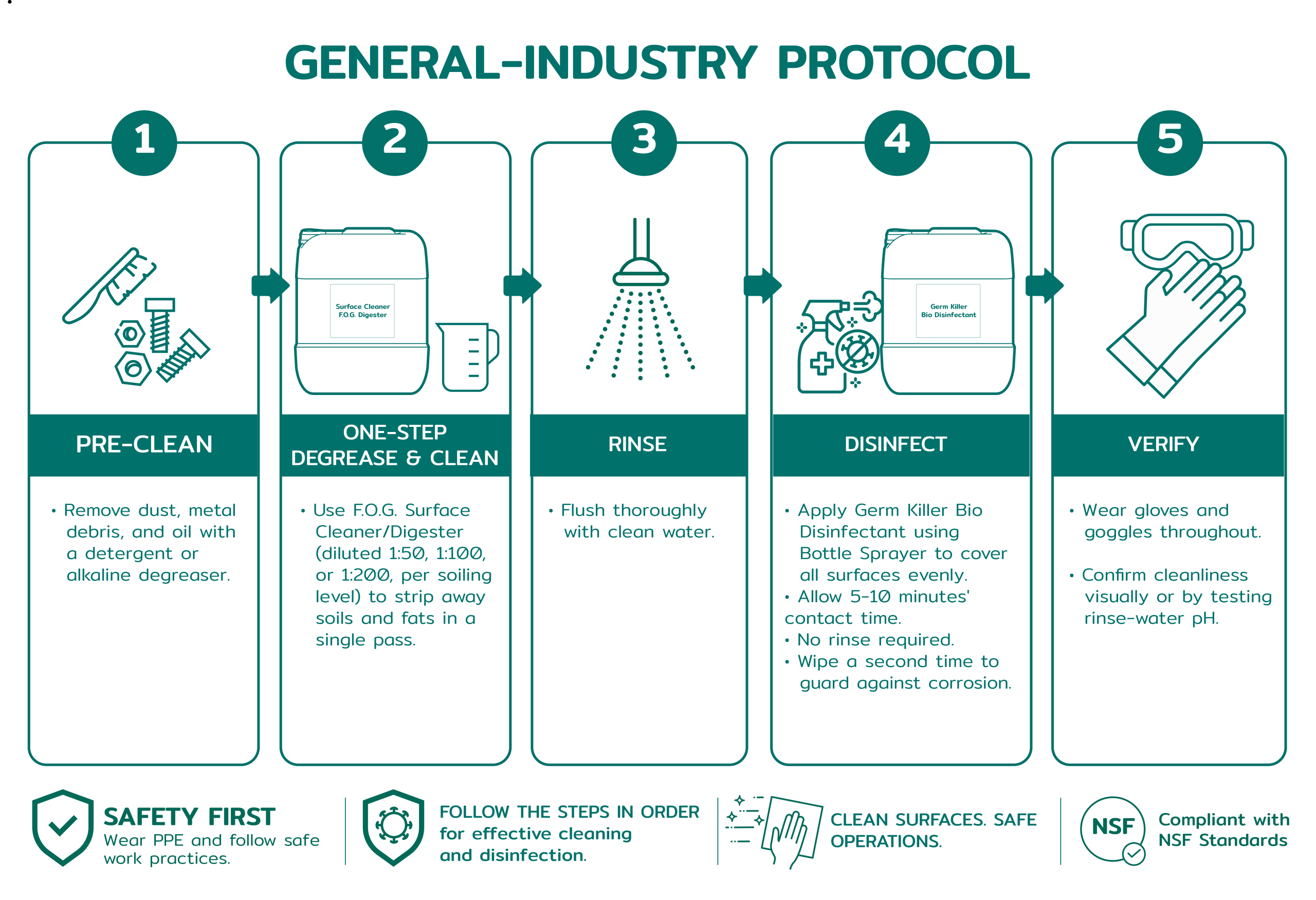
General-Industry Protocol
- Pre-clean: Remove dust, metal debris, and oil with a detergent or alkaline degreaser.
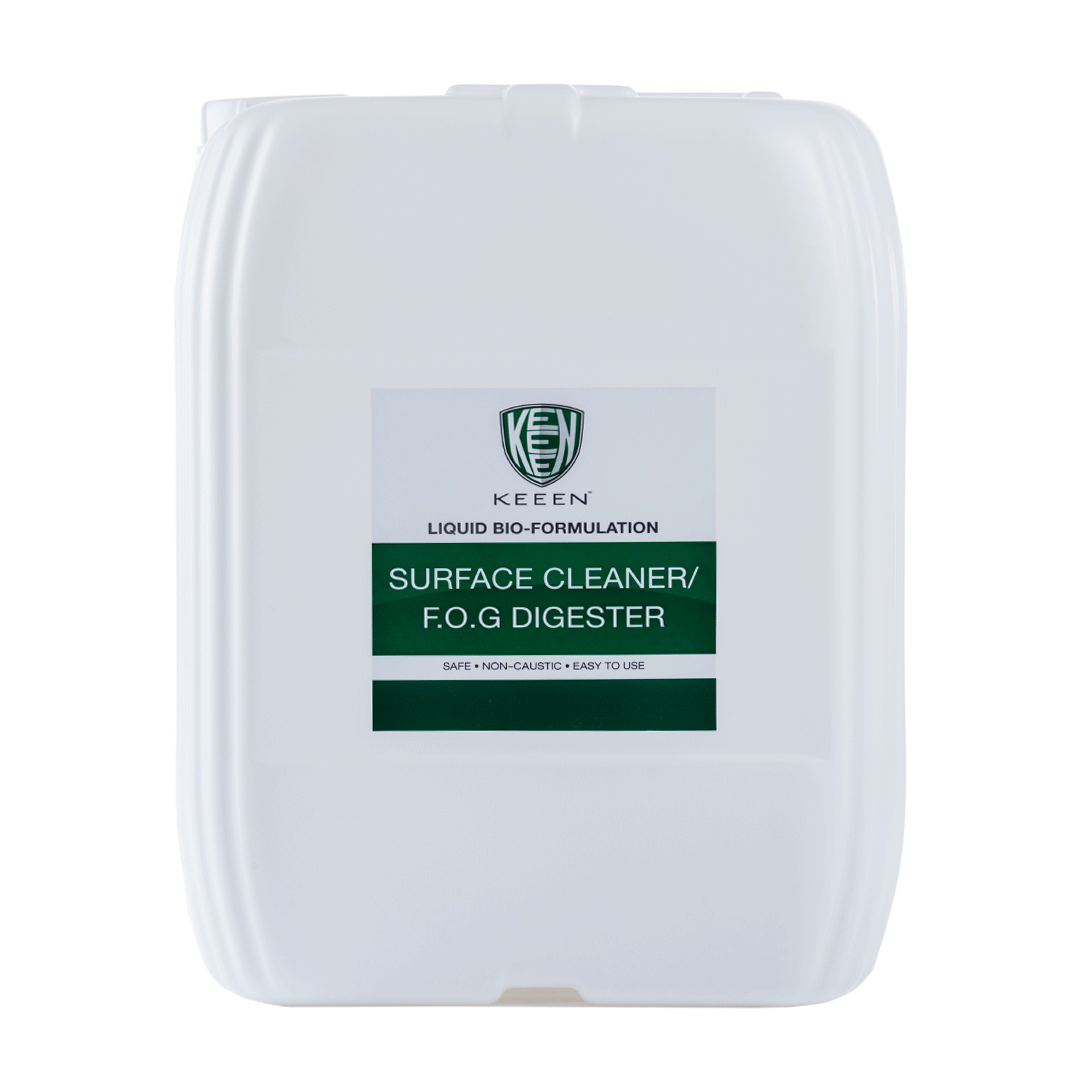
- One-step degrease & clean: Use F.O.G. Surface Cleaner/Digester (diluted 1:50, 1:100, or 1:200, per soiling level) to strip away soils and fats in a single pass.
- Rinse: Flush thoroughly with clean water.
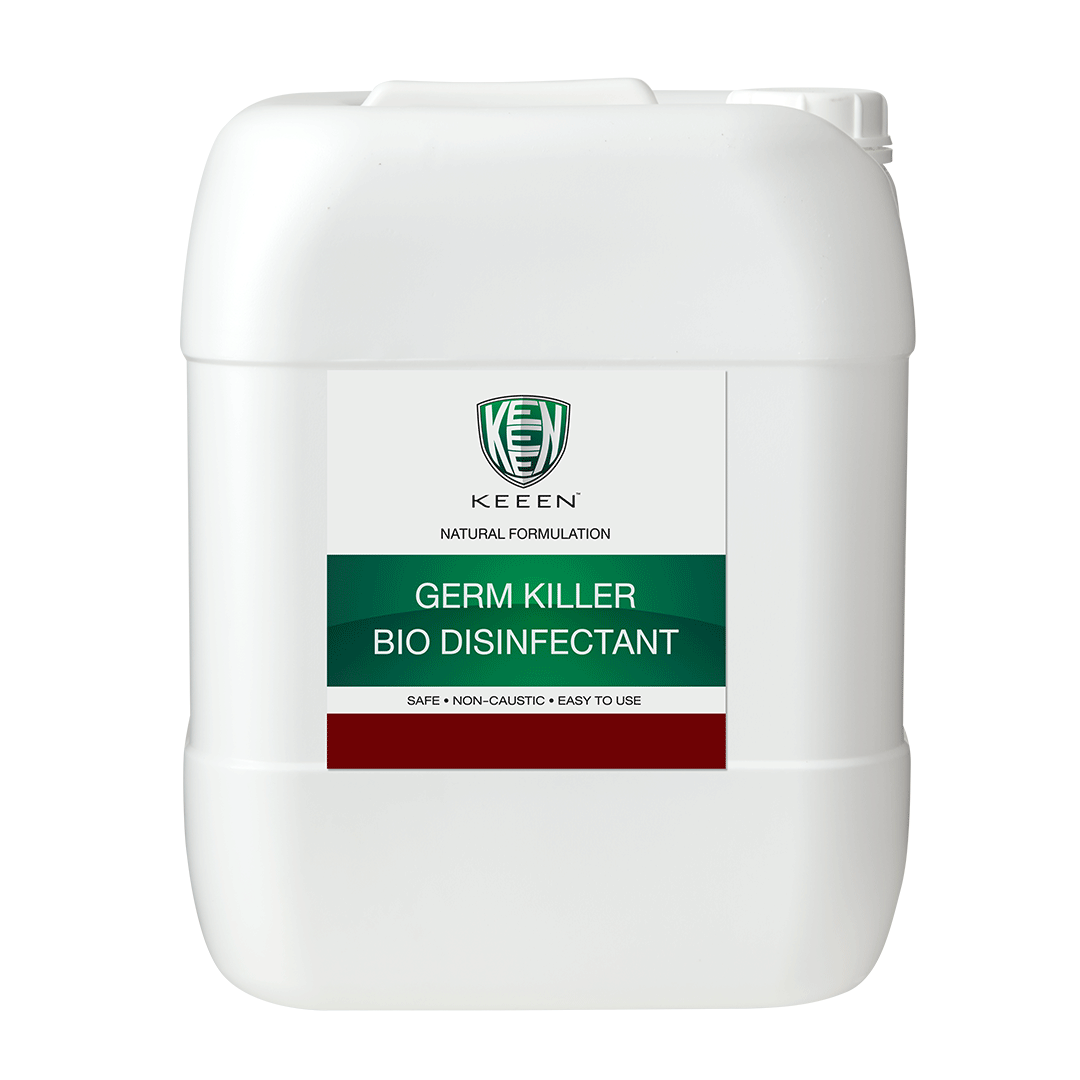
- Disinfect: Apply Germ Killer Bio Disinfectant, allow 5–10 minutes’ contact, then wipe a second time to guard against corrosion.
Verify: Wear gloves and goggles throughout. Confirm cleanliness visually or by testing rinse-water pH.
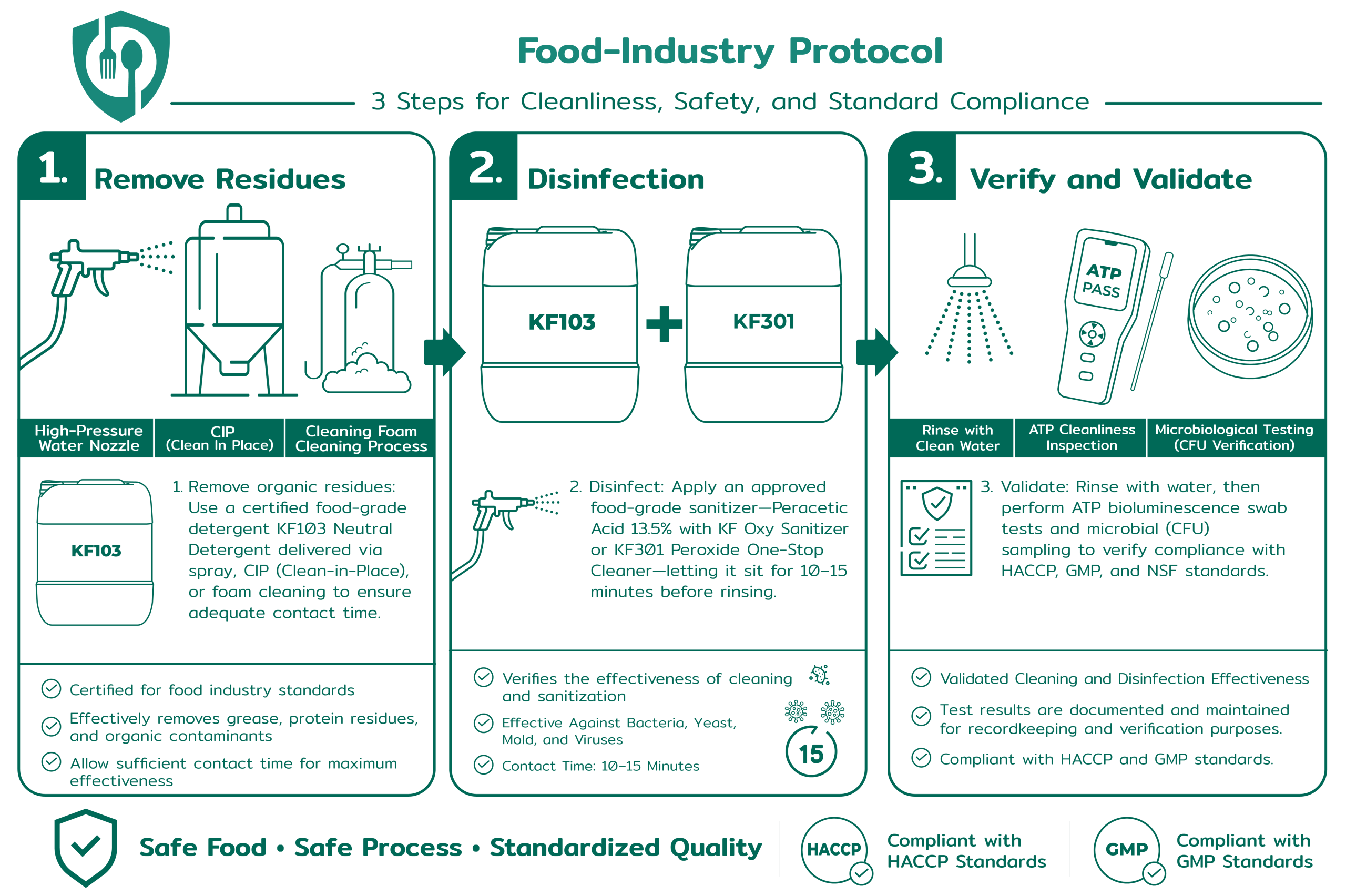
Food-Industry Protocol
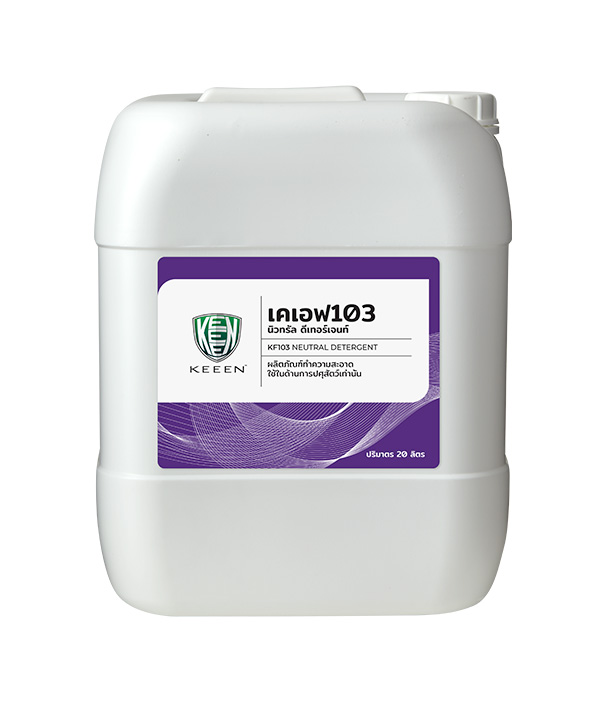
- Remove organic residues: Use a certified food-grade detergent KF103 Neutral Detergent delivered via spray, CIP (Clean-in-Place), or foam cleaning to ensure adequate contact time.
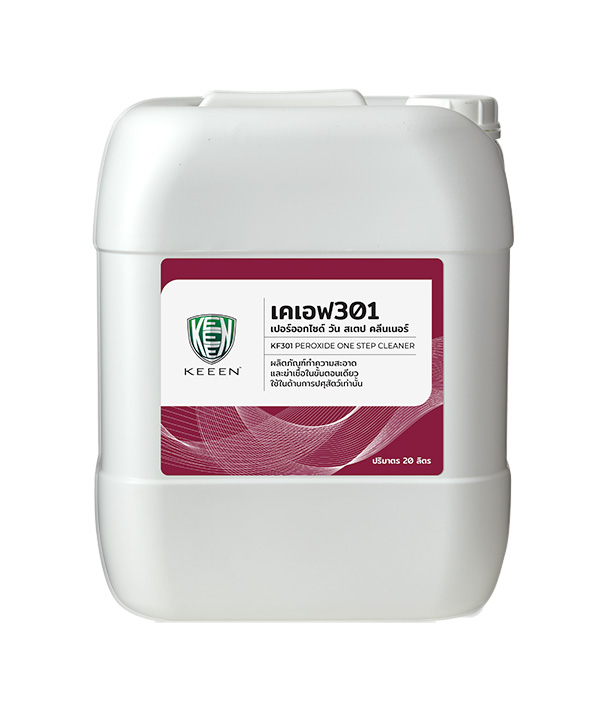
- Disinfect: Apply an approved food-grade sanitizer—Peracetic Acid 13.5% with KF Oxy Sanitizer or KF301 Peroxide One-Stop Cleaner—letting it sit for 10–15 minutes before rinsing.
Validate: Rinse with water, then perform ATP bioluminescence swab tests and microbial (CFU) sampling to verify compliance with HACCP, GMP, and NSF standards.
Proper surface maintenance is essential, it ensures cleaning and disinfecting agents work at full potency, protects your equipment, extends service life, meets industry regulations, and ultimately reduces costs, labor needs, and environmental impact in a sustainable way.