


Posted on August 21, 2026 by Keeen
3 Models for Effective Wastewater Management
Starting Right for Stability, Safety, and Long-Term Sustainability
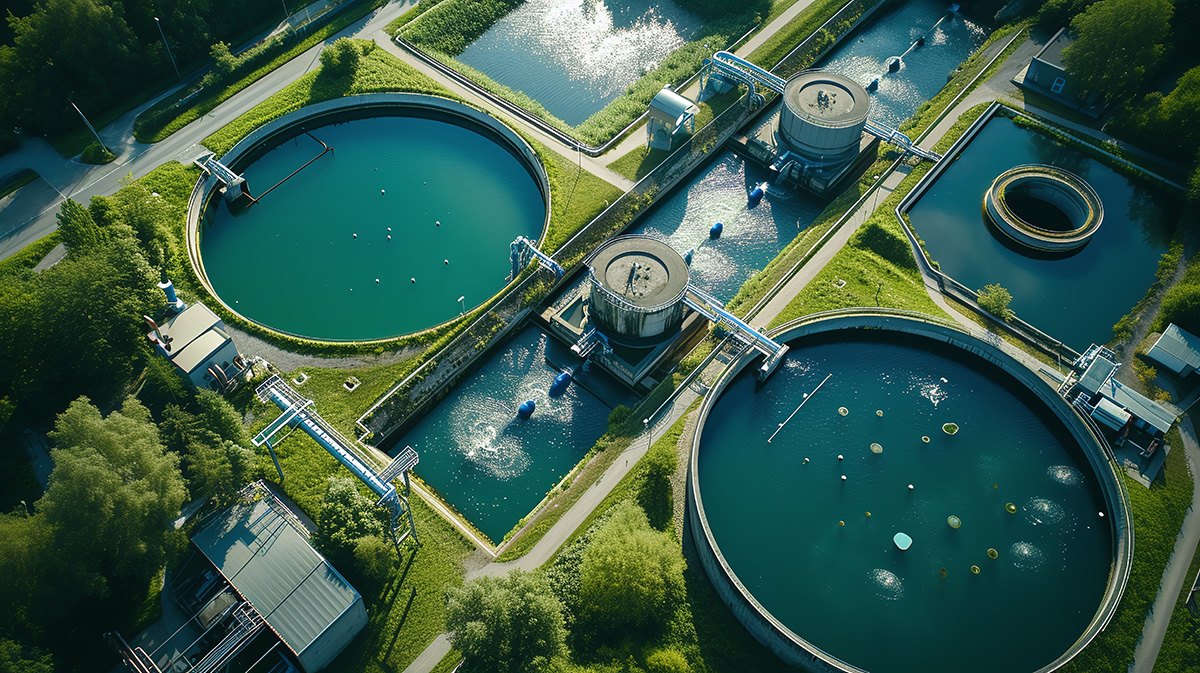
Wastewater treatment systems are a critical supporting infrastructure that directly impacts operational continuity, regulatory compliance, and an organization’s environmental credibility, across both general industries and food processing sectors.
In practice, many facilities face recurring challenges such as:
- Wastewater systems that meet discharge standards intermittently but lack stability
- Fluctuating BOD, COD, and FOG levels driven by production activities
- Odor issues, sludge bulking, foaming, or periodic microbial die-off
- Reliance on short-term corrective actions, such as chemical dosing or increased operating costs
These issues are rarely caused by technology alone. More often, they stem from the absence of a holistic, system-based approach spanning from upstream operations to end-of-pipe treatment.
To address this gap, KEEEN developed the BEE Framework, a structured model for wastewater management built on three interdependent components that must operate together:
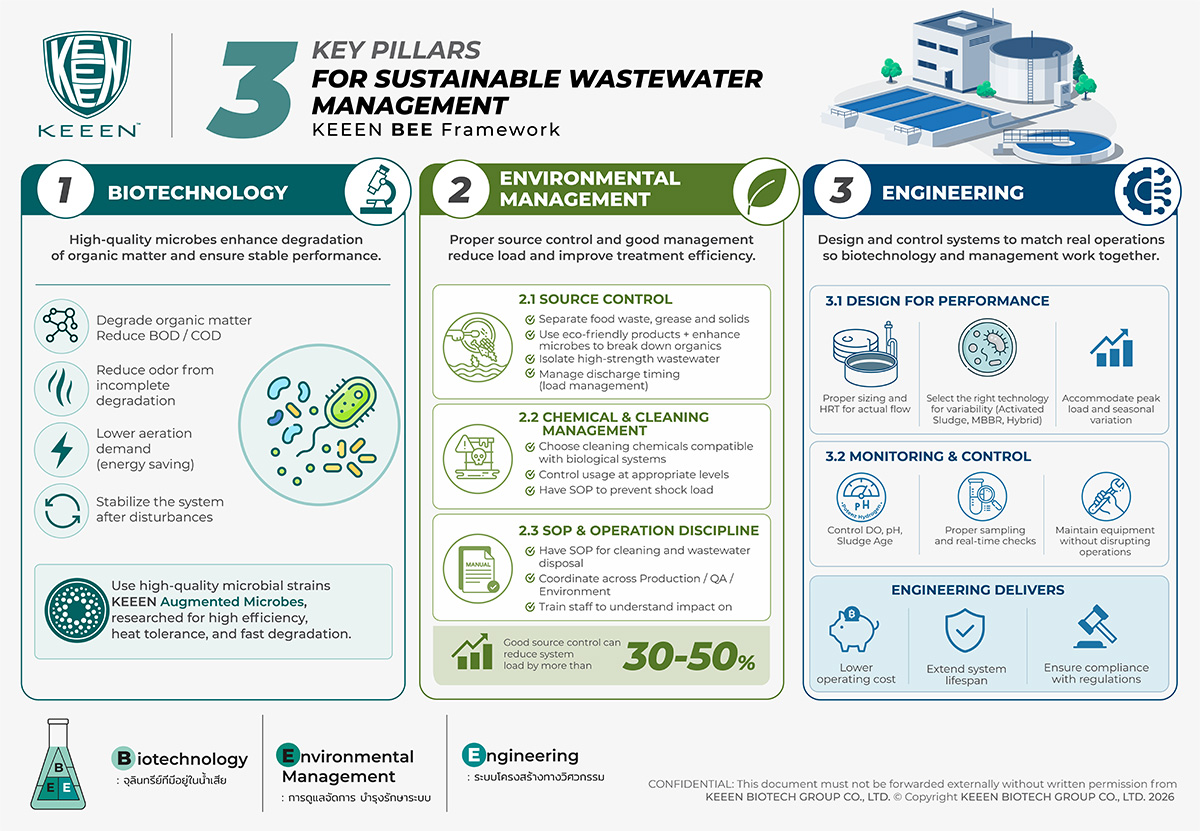
Biotechnology – Environmental Management – Engineering
1. Biotechnology
The Core of Biological Treatment Systems in Both General Industry and Food Processing
Regardless of industry type, most wastewater treatment systems rely on biological processes as the primary mechanism for organic matter removal.
The key distinction lies in the nature and complexity of organic pollutants generated by different industries.
1.1 Differences in Wastewater Characteristics by Industry Type
Food Processing Industry
- High BOD and COD concentrations
- Presence of fats, oils, and grease (FOG), proteins, starches, and sugars
- Significant fluctuations based on production cycles and seasonal variations
- Risk of residual disinfectants and cleaning chemicals entering the system
General Industry (e.g., logistics centers, manufacturing plants, large buildings, food Processing, hospitality)
- Moderate BOD/COD levels with activity-driven variability
- Potential presence of chemical residues from cleaning or operational processes
- Wastewater volume varies more by usage patterns than production output
1.2 The System-Level Role of Microorganisms
Microbial performance in wastewater treatment cannot be assessed solely by high CFU counts. Critical qualitative factors include:
- Capability to degrade complex organic compounds
- Tolerance to pH, temperature fluctuations, and residual chemicals
- Long-term population stability
- Reduced risk of filamentous bacteria growth and sludge bulking
The application of high-quality microbial solutions, such as KEEEN Augmented Microbes, developed through research and strain selection with a focus on degradation efficiency, heat tolerance, and rapid metabolic activity, delivers clear operational benefits:
- Reduction of odors caused by incomplete biodegradation
- Lower aeration demand and reduced energy consumption
- Faster recovery to steady-state conditions following load fluctuations
2. Environmental Management
Effective Upstream Control Is the Key to Reducing System Risk
Across both general industries and food processing facilities, many wastewater issues originate from inadequate environmental and operational management, including insufficient engineering oversight, inconsistent monitoring, and lack of coordinated system planning.
Environmental Management focuses on controlling activities and conditions that influence wastewater quality before it enters the treatment system.
2.1 Source Control – Managing at the Origin
- Separation of food waste, grease, and suspended solids
- Use of cleaning solutions that minimize harsh chemical loading while enhancing microbial degradation of fats and organic matter prior to biological treatment
- Segregation of high-strength wastewater from the main treatment stream
- Load management through controlled discharge timing
In food processing facilities, effective source control can reduce treatment system loading by 30–50% compared to end-of-pipe corrective measures.
2.2 Chemical & Cleaning Management
One of the most commonly overlooked factors is the impact of cleaning agents and disinfectants entering wastewater systems:
- Aggressive chemicals can inactivate or kill beneficial microorganisms
- Inconsistent chemical usage disrupts biological balance
- Lack of standardized procedures leads to unintentional shock loading
Selecting cleaning products that are compatible with biological treatment systems and maintaining controlled dosing practices is a critical element of Environmental Management and directly influences system stability.
2.3 SOPs and Operational Discipline
- Standard operating procedures (SOPs) for cleaning and wastewater discharge
- Clear communication between Production, QA, and Environmental teams
- Training operators to understand how daily operational actions affect wastewater performance
Well-implemented Environmental Management transforms wastewater treatment from a reactive system into a predictable and controllable process.
3. Engineering
Designing and Operating Systems That Reflect Real-World Conditions
Engineering is not merely the installation of equipment; it is the discipline that enables Biotechnology and Environmental Management to function together effectively.
3.1 Industry-Appropriate System Design
- Basin sizing and hydraulic retention time (HRT) aligned with actual wastewater volumes and loads
- Selection of appropriate technologies for load variability (Activated Sludge, MBBR, Hybrid Systems)
- Design capacity that accommodates peak loads and seasonal variations
3.2 Monitoring and Performance Control
- Control of dissolved oxygen (DO), pH, and sludge age
- Accessible and representative sampling points
- Maintenance practices that support continuous system operation
Well-executed engineering design and control contribute to:
- Reduced operational costs
- Extended system lifespan
- Consistent compliance with environmental regulations
Sustainable Wastewater Management Begins with a System Perspective
Whether in general industry or food processing, effective wastewater management cannot rely on a single technology or corrective measure.
Biotechnology brings the system to life through high-performance microorganisms.
Environmental Management reduces risk by aligning processes, people, and practices with environmental objectives.
Engineering ensures that system structures and controls are properly matched to operational realities.
When these three components function together, wastewater treatment systems shift from being an uncontrollable cost burden to becoming a strategic infrastructure that supports regulatory compliance, operational resilience, and long-term sustainability goals.
For consultation on the application of high-quality microbial solutions for wastewater treatment, please contact:
info@keeen.co.th