

Posted on January 9, 2026 by Keeen
🧽 Case Study: Grease Challenges in Mala–Shabu Restaurants
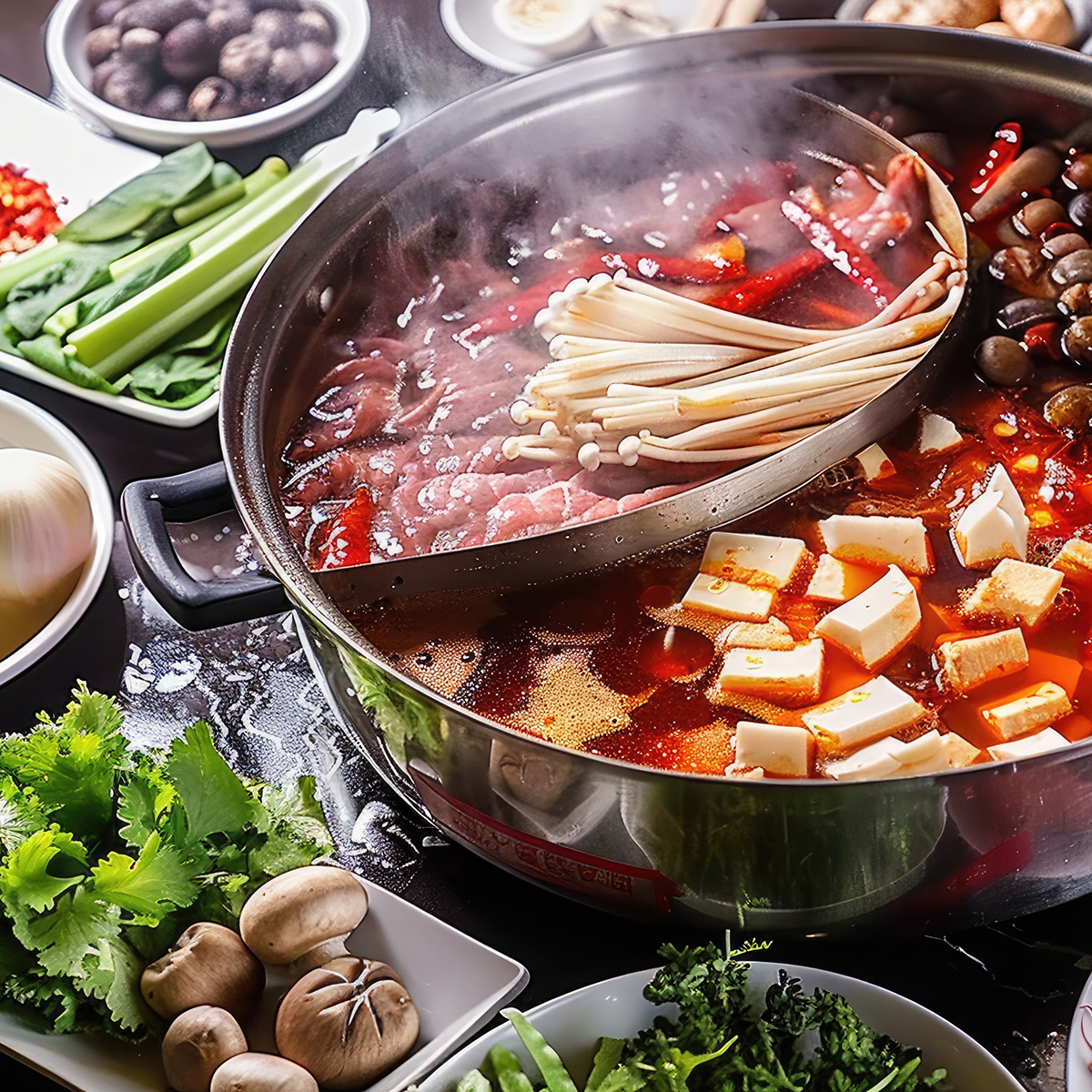
Mala and Shabu-style restaurants are among the most popular dining formats, particularly in food courts, shopping malls, and standalone locations. These operations rely heavily on oil-rich chili sauces and concentrated broths, and involve high-heat cooking equipment like built-in grills and hot pots at customer tables. This often results in:
- Localized heavy soiling around table surfaces and service areas
- Grease and burnt residue accumulating on stainless equipment, pots, grills, floors, condiment stations, and raw meat prep areas
Key issues include:
- Oil buildup in drainage systems, leading to unpleasant odors and clogged pipes
- Frequent use of harsh chemical degreasers, posing health risks to staff and customers
⚙️ Challenges Identified
Through field visits and discussions with cleaning staff, several key operational insights were discovered:
- Stubborn grease accumulation in hard-to-reach areas such as tabletop grills and inner stove edges
- Inconsistent dilution practices — some branches overused chemical cleaners, leading to increased cost and residue
- Burnt residues from high-heat cooking required abrasive scrubbing or strong chemicals, damaging surfaces
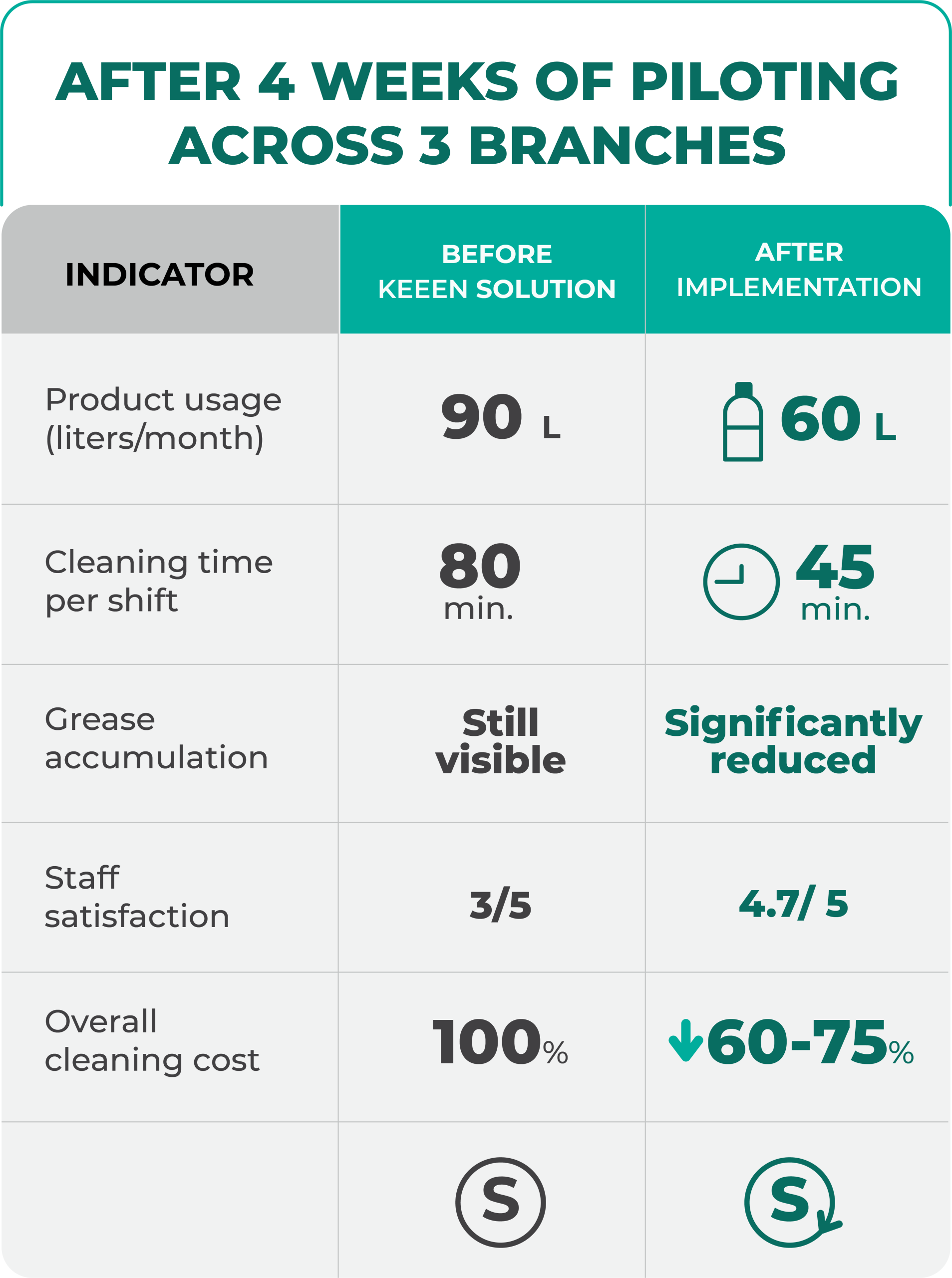
- Cleaning time averaged 60–90 minutes per shift, adding labor burden during closing hours
✅ KEEEN’s Solution
The KEEEN technical team proposed a 3-pillar solution tailored to the needs of Mala–Shabu restaurants:
-
Use of Specialized Products
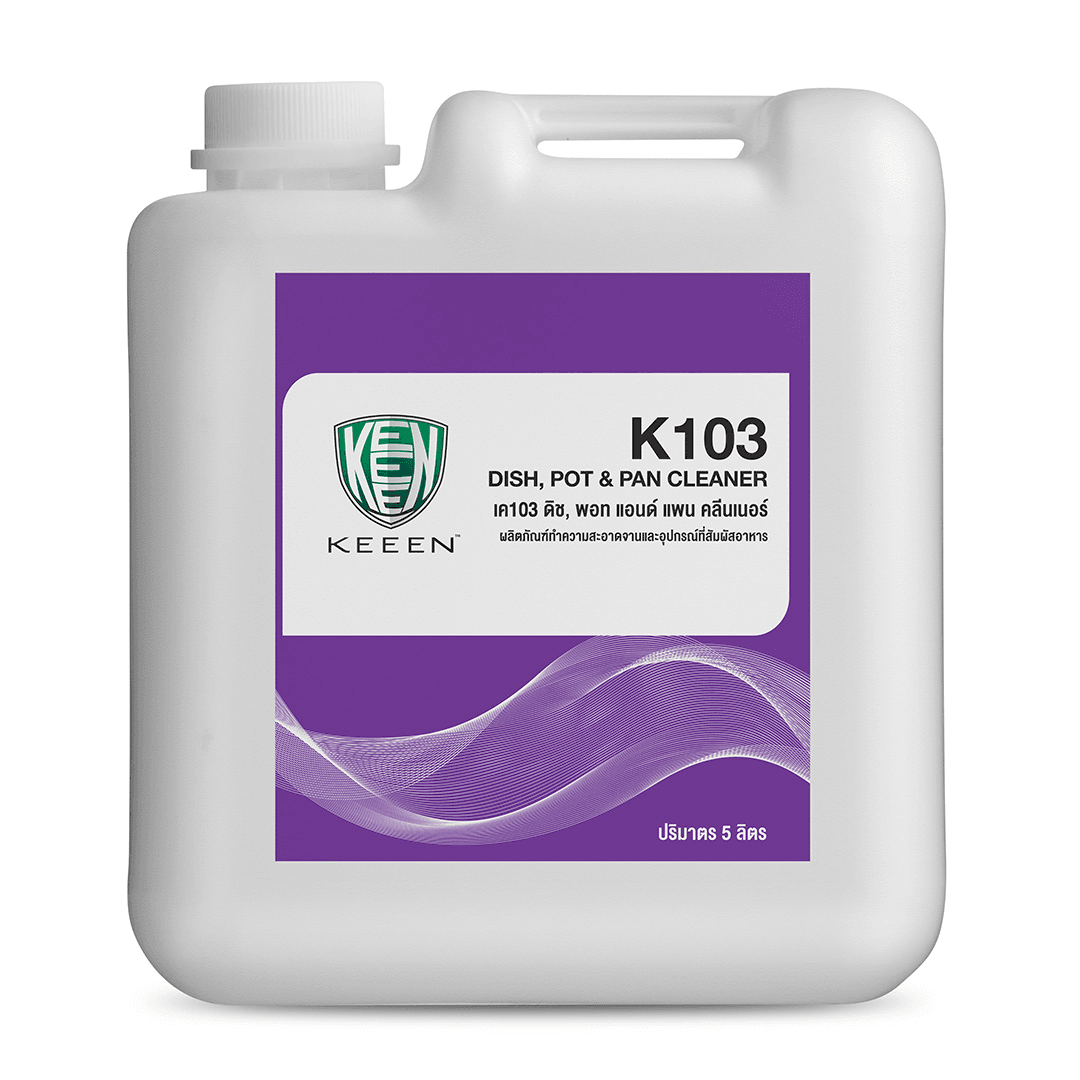
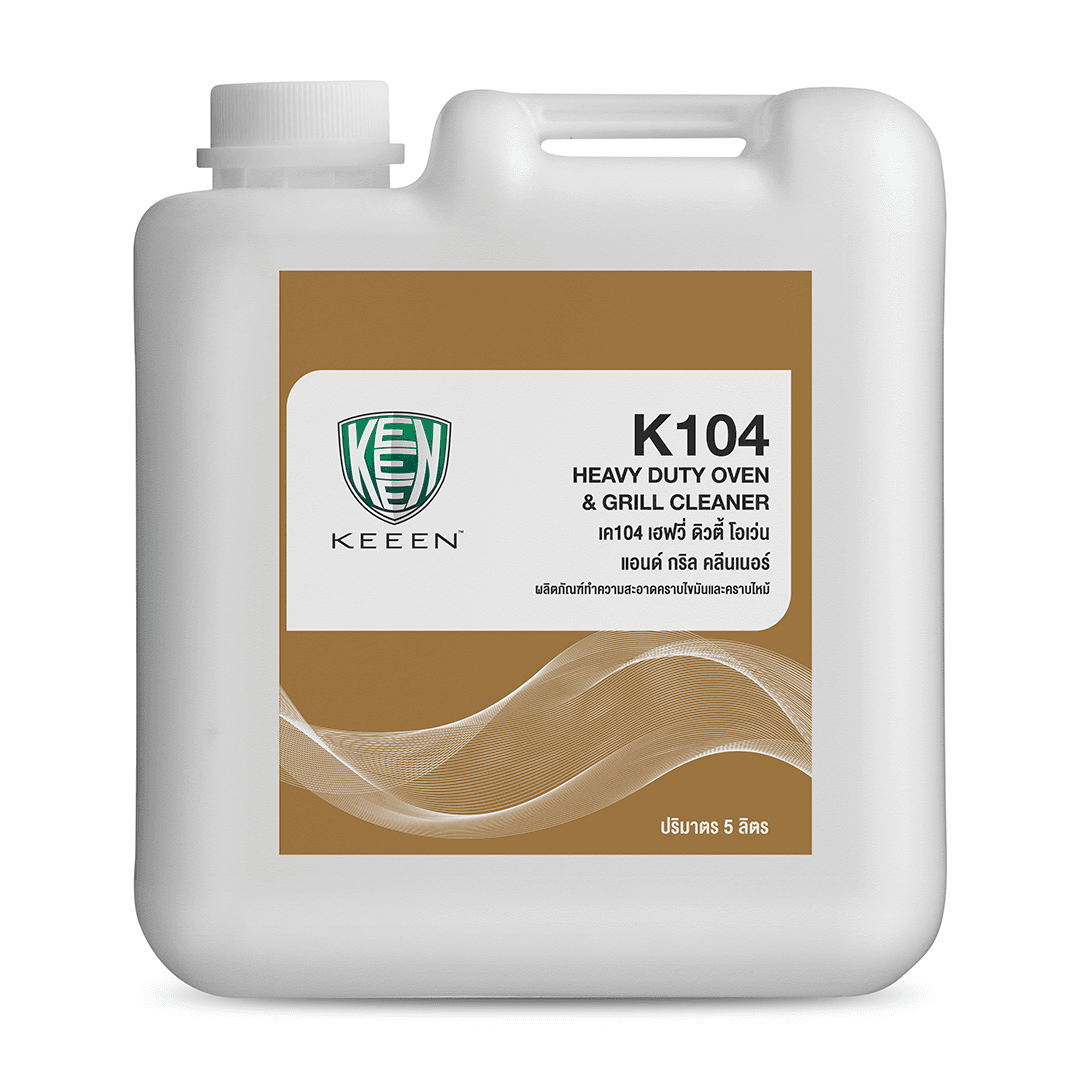
- KEEEN recommended bio-based cleaners specifically formulated for heavy grease removal, food-contact surface cleaning, and safe sanitation in kitchen and dining areas
-
SOP Optimization
- Adjust dilution ratios by area and application — some areas required more concentrated product for effective upstream grease removal
- Created a standardized usage guide to help staff determine the correct product amount for each cleaning zone
- Reinforced the importance of installing appropriately sized grease traps, especially in customer-heavy zones, and emphasized regular maintenance on peak days
-
Staff Training and Practical Demonstration
- Taught the “8-direction cleaning technique” to improve effectiveness
- Demonstrated “Pre-wash” to reduce product usage without compromising performance
- Instructed staff to separate utensils by type and material (e.g., chopsticks, spoons, plastic vs. ceramic) to ensure optimized cleaning cycles based on difficulty
💡 Results & Outcomes
🌱 Conclusion
The challenges of grease and oil buildup in Mala–Shabu operations can be addressed without harsh chemicals. By implementing tailored solutions using bio-based cleaning products and standardizing operational processes, restaurant owners benefit from:
- Lower operational costs
- Increased cleaning efficiency
- Enhanced hygiene and food safety
- Compliance with modern restaurant sustainability standards
KEEEN: Making food service environments cleaner, safer, and more sustainable — for both workers and customers.