


Posted on June 19, 2026 by Keeen
🌊 Impacts of Using Chemicals to Manage Oil Spills
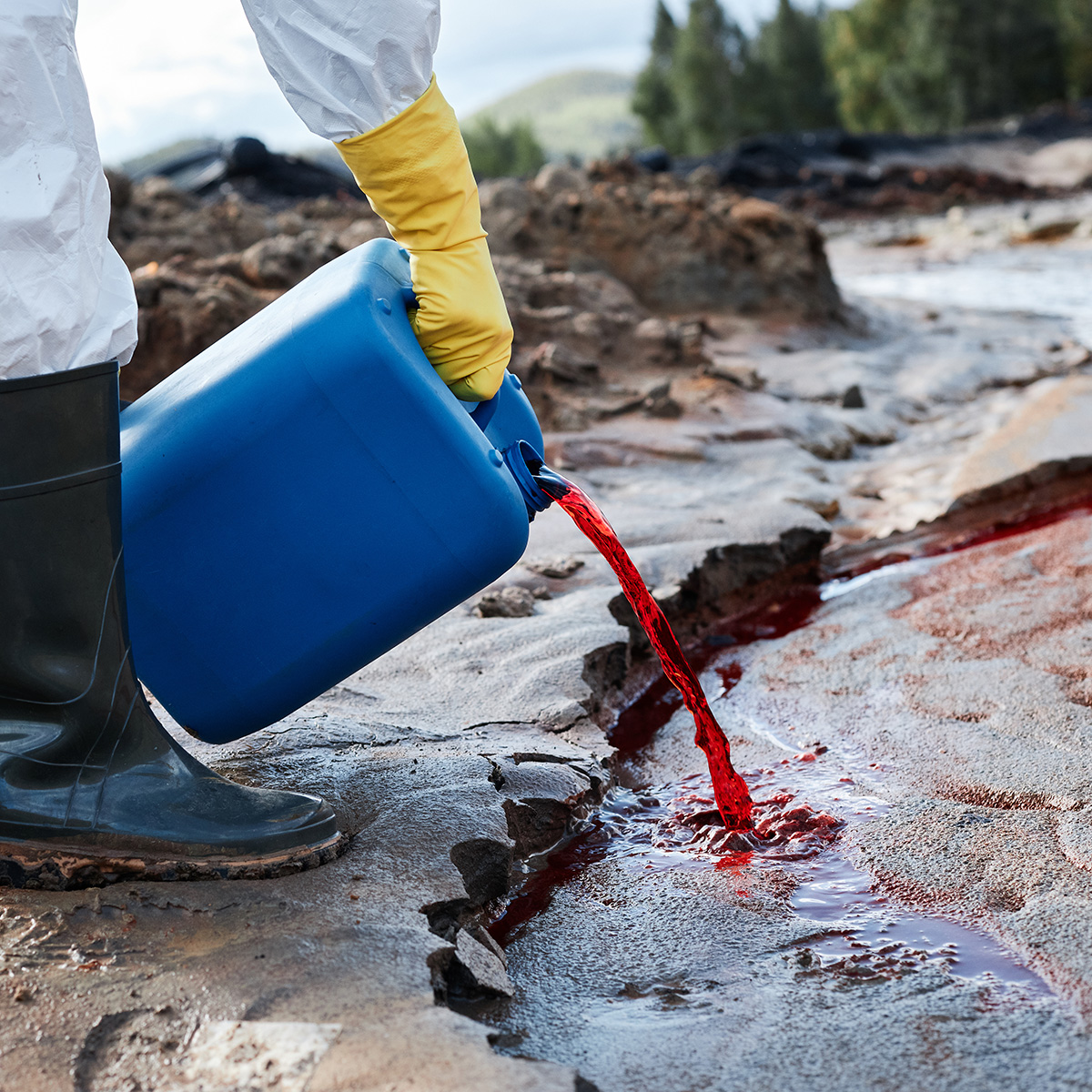
The use of chemicals such as dispersants and emulsifiers is a common strategy in oil spill response worldwide. These chemicals help break up surface oil slicks into smaller droplets, allowing natural microbial degradation. However, this approach brings significant environmental and health concerns that must be carefully considered.
🌱 Key Environmental Impacts of Chemical Use
1️. Impact on Marine Ecosystems
- ⚠️ Chemical-oil mixtures can create toxic “cocktails”
- Dispersants break up oil slicks into microdroplets (micelles), increasing the surface area of oil exposed to marine organisms.
- Oil droplets may penetrate deeper into the water column, exposing midwater and benthic organisms to hydrocarbons.
- 🐟 Toxicity to marine life and plankton
- Studies show dispersants like Corexit 9500 (used in the Deepwater Horizon spill) have low LC50 values for fish, shrimp, and shellfish.
- Damage to cell membranes in phytoplankton and zooplankton can disrupt marine food webs.
2️. Impact on Water Quality and Sediments
- 🌱 Introduction of persistent organic pollutants (POPs)
- Some dispersants enable oil components like PAHs (Polycyclic Aromatic Hydrocarbons) to sink and bind to sediments, which are resistant to natural degradation.
- 💧 Increased solubility of toxic compounds
- This raises risks of contamination in drinking water sources and groundwater systems.
3️. Human Health Risks
- 👷♂️ Hazards for response workers
- Chemical dispersants can irritate skin, eyes, and respiratory systems of personnel.
- 🍤 Seafood safety concerns
- Accumulation of toxins in fish, shrimp, and shellfish may lead to unsafe seafood, threatening public health and local fishing economies.
4️. Long-term Environmental Effects
- 🕒 Residue persistence
- Certain dispersant ingredients degrade slowly and can persist in the environment for years.
- ♻️ Disruption of natural biodegradation
- Dispersants may alter microbial communities, reducing the efficiency of hydrocarbon-degrading bacteria.
✅ Advantages and Limitations of Chemical Dispersants
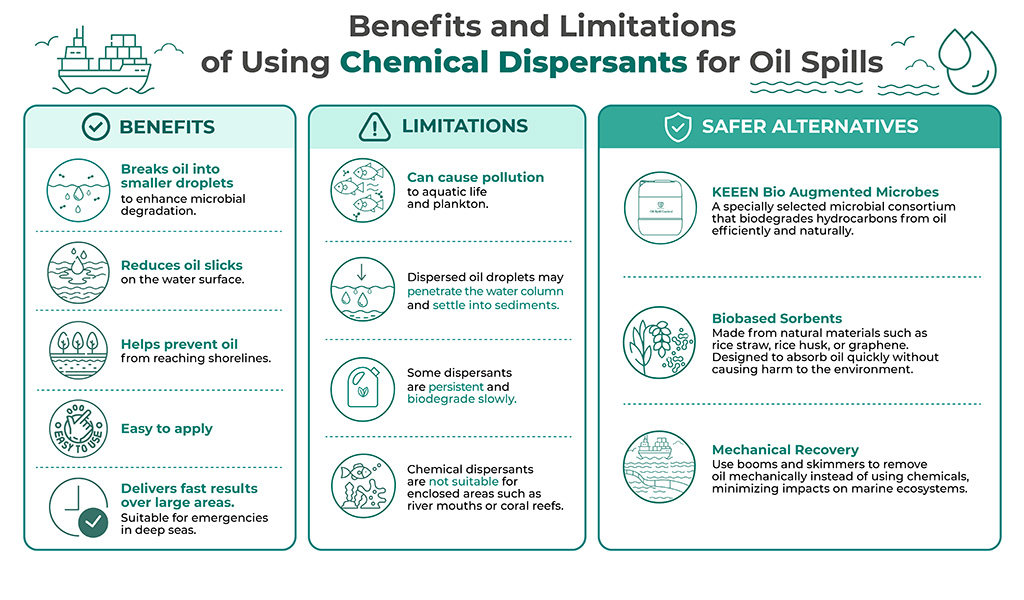
✅ Advantages
- Break oil into small droplets for faster microbial degradation
- Reduces surface slicks, protecting coastlines
- Quick and easy application in large areas
- Useful for deep-sea spill emergencies
⚠️ Limitations
- Toxic to marine life and plankton
- Oil may sink into water columns and sediments
- Persistent residues can harm ecosystems
🌱 Safer Alternative Approaches
- Bioremediation (Microbial Solutions), deploying specially selected microbes to degrade hydrocarbons naturally.
- Bio-based Sorbents, materials such as rice husks, straw, or graphene designed to absorb oil without introducing toxicity.
- Mechanical Recovery, using booms and skimmers to physically remove oil, avoiding chemical introduction to ecosystems.
While chemical dispersants are effective for immediate response in offshore, large-scale oil spills, they pose significant environmental and health risks if not managed properly. Sustainable methods such as bioremediation and bio-based sorbents are gaining interest as safer, eco-friendly alternatives for oil spill mitigation.